welcomeJiaxing Siren Machinery Co.Ltd

PRODUCT
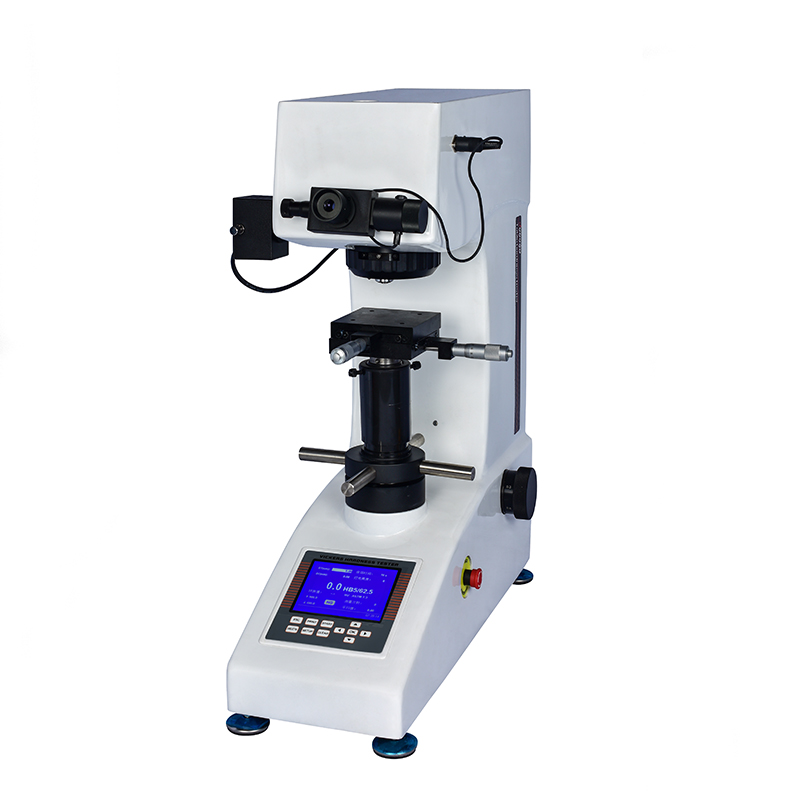
The HBS-62.5 digital display small load Brinell hardness tester is a high-tech product of optical and mechanical integration. The machine is novel in shape, has good reliability, operability and intuitiveness. It is a new type of Brinell using mechanical technology and photoelectric technology. test instrument. The machine adopts computer software programming and optical measurement system. Through the soft key input, you can choose different indenter and force value measurement, can adjust the strength of the measuring light source, can choose the dwell time, can display the indenter diameter, test force, measurement range, and direct reading on the screen on the LCD display. Find out the hardness value, simplifying the cumbersome look-up table. It is easy to use, and the measurement accuracy is higher due to the use of a rotary encoder. Because the Brinell hardness test uses a large pressure, the indenter ball diameter is large, and the indentation diameter is large, it is suitable for the hardness test of metal materials with large grains. Such as cast iron, non-ferrous metals and their alloys, various annealing and tempering treatments, and most of the steel materials supplied by the factory, etc., this instrument uses a relatively small part of the Brinell hardness value, so it is especially suitable for softer metals. Such as pure aluminum, copper, lead, tin, zinc, etc. and their alloys, the measured hardness is accurate. The hardness has high measurement accuracy, so the reproducibility and representativeness are good.
Main functions and features:
1. 4-inch large-screen LCD display, menu structure,
2. The test process is automated and easy to operate
3. High-definition optical system The brightness of the light source can be adjusted in 20 levels.
4. With the function of hardness value conversion, the upper and lower tolerance of hardness can be judged.
5. Diagonal length D1 and D2 encoder input, reduce human reading error.
6. Test results and data processing can be output through a printer.
7. The shell is cast in one time, the structure is stable and does not deform, and it can work in a relatively harsh environment;
8. The surface is treated with the car paint process, which has strong scratching ability and is still bright as new after years of use;
Main purpose and scope of use:
1. It is suitable for hardness tester testing of metal materials with large grains, which can reflect the comprehensive performance of the material;
2. Cast iron, steel, non-ferrous metals, especially for softer metals, such as pure aluminum, lead, tin, etc.
Technical parameter:
Product number | HBS-62.5 |
Test force | 1, 5, 10, 15.625, 30, 62.5kgf |
display | 5-digit hardness value, 4-digit diagonal length (D1, D2), |
Test force retention time (s) | Hold time, test times, average, standard deviation, return |
Load control | 1~99 |
Conversion ruler | Automatic (load/hold/unload) |
Minimum unit of measure | Rockwell, Surface Rockwell, Vickers |
Total magnification | 0. 25μm (subject to the objective lens selected) |
Objective lens: Observe or measure 5X measurement 10X (special objective lens please customize) | |
Data output | Total magnification: 50X 100X |
Maximum size of test piece | Built-in printer |
Indenter center to inner wall | Maximum height 165mm |
Executive standard | 130mm |
power supply | Accuracy meets GB231.2, ISO6506-2 and ASTME10 |
Instrument weight | AC220V±5%, 50~60Hz |
Standard accessories | About 45kg |
Accessories
Name | Quantity | Name | Quantity |
Instrument host | 1 | Objective lens 5x, 10x | 1 each |
Digital measuring eyepiece 10x | 1 | Brinell indenter Φ1Φ2.5Φ5 | 1 each |
Standard hardness block | 2 | Large, medium and V-type test benches | 1 each |
power cable | 1 | Product certificate, product instruction manual | 1 each |
fuse | 2 | ||
Optional accessories | XY table, CCD measurement system. | ||